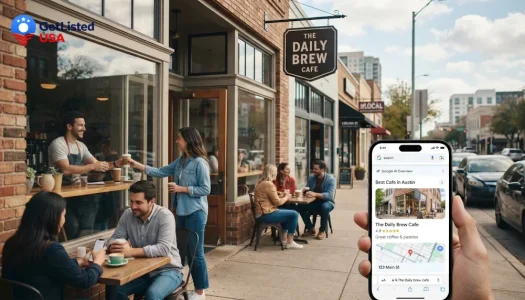


To optimize your Google Business Profile in 2027, start with your primary category, the single most important local ranking factor according to Whitespark’s Local Search Ranking Factors report. Then complete every available field (services, products, hours, attributes), add at least 10 current photos, publish updates regularly, and respond to every review. Google Business Profile signals, combined with proximity and review activity, drive the large majority of local map pack visibility.
Google Business Profile is the foundation of local search visibility. It is not simply a directory listing you fill in once and forget. It is Google’s primary data source for understanding what your business is, where it is, and whether it deserves to appear when someone nearby searches for what you offer. For any business trying to rank in the local map pack, this is the single highest-leverage asset available, and it costs nothing to use.
This guide walks through every major optimization lever on Google Business Profile in 2027, grounded in Whitespark’s published Local Search Ranking Factors research and Google’s own stated guidance, not speculation.
Category Selection: The Single Most Important Ranking Decision
Whitespark’s Local Search Ranking Factors report identifies your Google Business Profile primary category as the most important local pack ranking factor measured, ahead of proximity, review signals, and on-page or link-based signals. Your category determines which searches you are even eligible to appear for, which makes this the first decision to get right, not an afterthought.
A Google Business Profile supports one primary category and up to nine secondary categories, ten in total. According to BrightLocal’s guidance on choosing categories, the right approach depends on your situation: a narrowly focused single-location business should pick the most specific category that completes the sentence “this business is a ___,” while a business with a broader focus should prioritize the category matching the type of customer it most wants to attract. Avoid filling every secondary slot simply because it is available. Choose only categories that genuinely and accurately describe services you offer.
Proximity Is the Second Most Important Factor, and You Can’t Change It
Whitespark’s report ranks proximity of your business address to the point of search as the second most important local pack ranking factor, directly behind category. This is a structural reality of local search: a searcher a half mile from your business will generally see you ranked ahead of an equally well-optimized competitor five miles away, all else being equal.
Since you cannot change where your business is physically located, the practical takeaway is to make sure every other optimizable signal- category completeness, reviews- is as strong as possible to compete within the geographic radius you do have access to, and to make sure your address data is completely accurate and consistent with your listings everywhere else. See our NAP consistency guide for the full detail on why that consistency matters.
Complete Every Available Profile Field
Beyond category, Whitespark’s report lists keywords in your business title, the presence of defined services, and overall profile completeness among the ranking factors that matter. A complete profile also simply converts better: a searcher comparing two nearby, similarly rated businesses will generally choose the one with more information available, not less.
- Services and products: list every service you offer individually, with a short description for each, rather than relying on your category alone to communicate what you do
- Business description: write a clear, accurate description of your business, who you serve, and what makes your approach distinct, without keyword stuffing
- Hours: keep standard hours accurate and use special hours for holidays or temporary changes rather than leaving outdated hours live
- Attributes: complete every relevant attribute Google offers for your category (accessibility, payment methods, service options) since these feed both ranking signals and specific, high-intent searches
- Website and booking links: link directly to the most relevant page, not always your homepage, and add booking or ordering links where supported
Photos: An Underused, Low-Cost Lever
There is no official minimum photo count, but a profile with few or no photos puts you at a real disadvantage against competitors who have invested the time. Photos are often the first thing a searcher scans when comparing nearby options, well before reading your description or reviews in detail.
A reasonable starting target is 10 or more current, genuine photos: your storefront or location, your team at work, your products or completed projects, and the interior if customers visit in person. Replace outdated photos when your location, team, or offerings change meaningfully, rather than leaving an old photo set live indefinitely.
Posts and Ongoing Activity
Whitespark’s report groups posting activity, Q&A engagement, and other ongoing actions under behavioral and engagement signals, a category that gained importance in recent survey years relative to more static signals like citations. Posting is a reasonable, low-cost way to keep your profile active and give searchers current information: a seasonal offer, a new service, an upcoming event.
Treat posting as a supporting habit rather than your primary optimization lever. Category selection and profile completeness do more of the work. A consistent, modest posting habit, such as one update every week or two, is more valuable than sporadic bursts followed by long gaps.
Reviews: A Rising Signal You Can Influence Directly
Review and behavioral signals were among the categories that gained the most relative importance in Whitespark’s most recent survey year. A steady flow of new reviews, combined with a habit of responding to every review you receive, supports both your ranking and your conversion rate directly. For the complete, compliant approach to generating and responding to reviews, see our dedicated guide to getting more customer reviews.
Whitespark’s Top Local Ranking Factors at a Glance
Whitespark’s Local Search Ranking Factors report ranks individual factors, not just broad categories. The table below summarizes the factors most relevant to Google Business Profile optimization specifically, in the order Whitespark’s survey of local SEO experts ranked them, along with the practical action each one points to.
| Rank | Ranking Factor | What It Means for Your Profile |
|---|---|---|
| #1 | Primary GBP category | Choose the single most specific, accurate category available, not the broadest one that feels safe |
| #2 | Proximity to the searcher | You can’t change this directly, but accurate address data lets Google use it correctly |
| #3 | Keywords in the GBP business title | Use your real, accurate business name only; don’t stuff keywords into the name field |
| Rising | Review and behavioral signals | Review volume, recency, and response rate, plus clicks and calls, carry growing weight |
| Declining | Citation signals | Still worth building, but no longer the dominant lever it once was |
| #22 | Presence of defined GBP services | List services individually rather than relying on category alone |
Broad Category vs. Specific Category: A Quick Comparison
| Broad Category (e.g. “Contractor”) | Specific Category (e.g. “Plumber”) | |
|---|---|---|
| Search eligibility | Appears for more generic searches | Appears for the exact searches your real customers use |
| Competition | Competes against every business in the broad category | Competes only against directly relevant businesses |
| Ranking factor weight | Dilutes the #1 ranking factor’s effectiveness | Maximizes the #1 ranking factor’s effectiveness |
| Customer match quality | Attracts a wider, less qualified mix of inquiries | Attracts inquiries that match what you actually offer |
Claiming and Verifying Your Profile Comes First
None of the optimization above matters until your profile is claimed and verified. If you have not yet completed this step, see our step-by-step guide to claiming and verifying your Google Business Profile before working through the rest of this guide.
Why Citation Signals Matter Less Than They Used To
Whitespark’s report also tracks how much weight each factor group carries relative to the others over time, and one of the clearer multi-year trends is a gradual decline in the relative importance of citation signals, the consistency of your business name, address, and phone number across directories. This does not mean citations are worthless. It means the newer frontier of local SEO gains has shifted toward your Google Business Profile itself and your review activity, rather than simply accumulating more directory listings.
For a business starting from zero, building a clean citation foundation, including a free GetListedUSA listing, still matters. For a business that already has a reasonably complete citation profile, the marginal return on adding more directories is smaller today than the marginal return on improving Google Business Profile completeness, photos, and review activity. Allocate your time accordingly.
Common Google Business Profile Mistakes That Hold Businesses Back
A few recurring mistakes show up across businesses that have claimed and even partially optimized their profile but still underperform similarly positioned competitors:
- Choosing a broad category for safety: picking a generic category instead of the most specific accurate one, out of a mistaken belief that broader means more search eligibility
- Leaving the services section empty: relying on the category alone to communicate what you offer, rather than listing individual services with descriptions
- Stale photos: keeping a photo set from years ago that no longer reflects the current location, team, or offerings
- Ignoring reviews: collecting reviews passively without a response habit, missing both the trust-building and the behavioral signal value that responding provides
- Outdated hours after a change: updating a website but forgetting to update Google Business Profile hours after a schedule change, which actively misleads searchers rather than simply underperforming
Frequently Asked Questions
Q: How many categories can I add to my Google Business Profile?
A: One primary category and up to nine secondary categories, ten in total. Be selective rather than filling every slot.
Q: What is the single most important Google Business Profile ranking factor?
A: Your primary category, according to Whitespark’s Local Search Ranking Factors report, ahead of proximity, reviews, and on-page or link signals.
Q: Does posting regularly on Google Business Profile actually help rankings?
A: It falls under behavioral and engagement signals, which gained importance in recent survey years. It is a reasonable supporting signal, not the primary lever.
Q: How many photos should a Google Business Profile have?
A: There is no official minimum, but a reasonable starting target is 10 or more current, genuine photos covering your location, team, and work.
Q: Is Google Business Profile optimization a one-time task?
A: No. Review your profile at least quarterly and immediately after any operational change, since outdated information actively works against you.
Your Google Business Profile Is Your Highest-Leverage Local SEO Asset
Every other local SEO tactic, directory citations, content, reviews, ultimately supports or feeds into what your Google Business Profile communicates to both Google and the searcher deciding whether to call you. Start with your primary category, complete every available field, build a steady review habit, and keep the whole profile current. Then round out your broader citation presence with a free listing on GetListedUSA and our full, complete local SEO checklist.