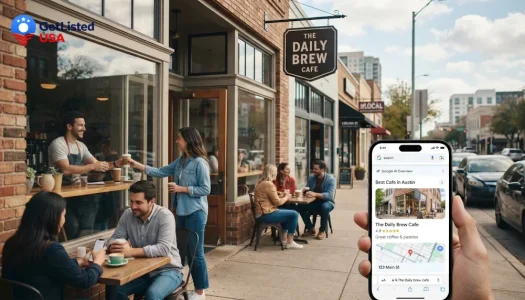

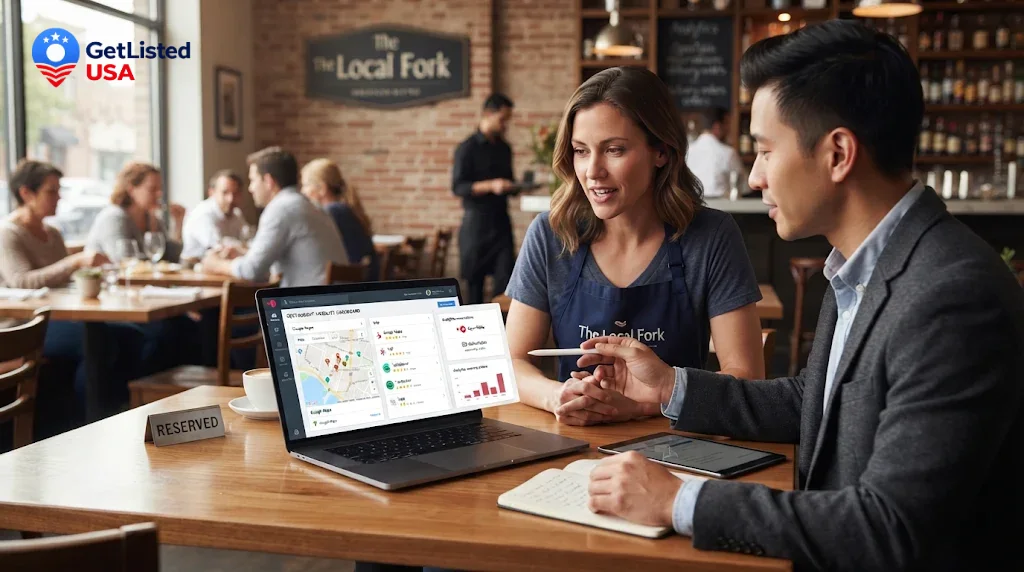
The directories that matter most for restaurants in 2027 are Google Business Profile, Yelp, and, depending on your service style, OpenTable for reservations or delivery platforms for takeout and delivery. TripAdvisor adds value for restaurants near tourist and hotel traffic. Beyond these category-specific platforms, a general business directory listing such as GetListedUSA adds a foundational citation that supports NAP consistency across your entire online presence.
Restaurants face a genuinely more complex directory landscape than most other local businesses operate within day to day. Diners research restaurants across review platforms, reservation tools, delivery apps, and general search, often within the same single decision made in a matter of minutes. Getting listed in the right places, with accurate, current information, directly affects whether a hungry searcher chooses your restaurant or the one next door with a cleaner, more complete, more trustworthy-looking profile.
This guide walks through the full directory and platform landscape for restaurants, in rough priority order, and explains what actually matters most on each individual platform a given restaurant might reasonably consider using.
Google Business Profile: The Foundation for Every Restaurant
Google Business Profile is the single most important platform for any restaurant because it controls your visibility in Google Search and Google Maps, including the local map pack that appears for searches like “restaurants near me” or “[cuisine type] near me.” A complete profile should include your menu, accurate hours (including any seasonal or holiday changes), photos of food and the dining space, your specific cuisine category, and active review management.
For restaurants, GBP features beyond the basics matter more than in most other categories: the menu section, the “popular dishes” that appear based on photos and reviews, and attributes like outdoor seating, delivery, or reservation availability all directly influence a diner’s decision at the exact moment of search.
Yelp: Still the Dominant Restaurant-Specific Review Platform
Yelp remains a dominant platform specifically within the restaurant and food category, where diners have historically used it more heavily to browse, filter by cuisine and price, and read detailed reviews than in most other business categories. A complete, actively managed Yelp profile with current photos, menu information, and review responses carries real weight for restaurant discovery specifically, even in markets where Yelp has lower relative importance for other business types.
Keep your Yelp categories, price range, and menu highlights current, and respond to reviews using the same professional, non-defensive approach covered in our online reputation management guide.
OpenTable and Reservation Platforms
OpenTable and similar reservation platforms matter specifically for restaurants that take bookings, particularly full-service, sit-down restaurants. The value is twofold: discoverability within the platform’s own search and browsing tools, and the convenience factor of letting a diner book directly rather than calling. Counter-service, fast-casual, or walk-in-only restaurants generally see limited value from reservation-specific platforms compared to general discovery and review platforms.
TripAdvisor for Tourist and Hotel-Adjacent Traffic
TripAdvisor remains a primary planning tool for travelers, which makes it especially valuable for restaurants located near hotels, tourist attractions, or in destinations with significant visitor traffic. For a restaurant serving primarily local, repeat customers, TripAdvisor carries comparatively less weight than Google and Yelp, though a complete profile still costs little to maintain once set up.
Restaurant Platform Comparison at a Glance
| Platform | Primary Strength | Best Fit |
|---|---|---|
| Google Business Profile | Controls visibility in Search and Maps, including the local map pack | Every restaurant, without exception |
| Yelp | Deep, restaurant-specific browsing and review culture | Every restaurant, especially sit-down and casual dining |
| OpenTable | Reservation management and discovery | Full-service restaurants that take bookings |
| TripAdvisor | Trusted by travelers planning ahead | Restaurants near hotels or tourist attractions |
| Delivery apps | Direct order flow and in-app discovery | Restaurants offering delivery or takeout |
Delivery and Takeout Platforms
For restaurants offering delivery or takeout, presence on the major delivery platforms used in your market functions as both a distribution channel and a discovery surface, since many customers browse directly within these apps rather than searching Google first when deciding what to order. Keep menu pricing and item availability synchronized across every delivery platform you use to avoid customer frustration from mismatched information.
General Business Directories Still Add Foundational Value
Beyond restaurant-specific platforms, a general business directory listing adds a citation that supports your broader NAP consistency and local SEO foundation in a way that restaurant-specific platforms, which focus on menus and reviews rather than structured citation data, do not fully replace. Use general directories such as GetListedUSA alongside your restaurant-specific platforms, not as a substitute for them.
Read our general local SEO coverage for restaurants, including our dedicated local SEO guide for restaurants in the USA, and our broader guide to US business listing sites for the full directory landscape beyond food-specific platforms.
Keeping Menu and Pricing Information Synchronized
A restaurant’s menu, pricing, and item availability often appear across half a dozen or more platforms simultaneously: Google Business Profile, Yelp, the restaurant’s own website, and every delivery platform in use. Keeping these synchronized is a genuine operational challenge, and mismatches, such as a menu item shown as available on a delivery app but discontinued in person, create a frustrating customer experience that often results in a negative review even when the underlying food and service were fine.
Build a habit of updating every platform at the same time whenever a menu changes, rather than updating your primary website or POS system first and other platforms “when there’s time.” Seasonal menu items in particular are a common source of mismatches, since they are added and removed more frequently than core menu items.
Handling Negative Reviews That Mention Specific Dishes or Service Issues
Restaurant reviews frequently reference specific dishes, specific staff interactions, or a specific visit date, which makes them more identifiable and more actionable than a vague negative review. Responding with a specific, relevant acknowledgment, referencing the dish or situation mentioned rather than a generic apology, demonstrates genuine attention and is more convincing to future readers deciding whether to trust your restaurant.
Follow the same core response principles covered in our online reputation management guide: acknowledge specifically, avoid public arguments over details, and offer a way to resolve the issue directly when appropriate.
Photos Matter More for Restaurants Than Almost Any Other Category
Food is a visually driven purchase decision, which makes photos unusually important for restaurants compared to most other local business categories. Current, high-quality photos of actual dishes, the dining room, and the exterior storefront help both diners deciding where to eat and platforms like Google, which surface “popular dishes” sections based partly on uploaded and customer-tagged photos.
Keep photos current as your menu changes, and prioritize photos of your most ordered or most distinctive dishes, since these are what diners scanning multiple options in a short window are most likely to make a decision based on.
Seasonal and Limited-Time Menu Items Need Their Own Visibility Plan
A seasonal or limited-time menu item generates a short window of search interest that is easy to miss if your directory listings and website aren’t updated in time. Plan to add seasonal items to your Google Business Profile, website, and relevant delivery platforms at the start of the season they’re relevant for, and remove them promptly when they end, rather than leaving outdated seasonal items live long after they’re actually available.
Dietary and Accessibility Information Deserves a Dedicated Place
Searches like “vegan restaurant near me,” “gluten free options [city],” or “wheelchair accessible restaurant” are common, specific, high-intent queries. Restaurants that clearly document dietary accommodations, allergen information, and physical accessibility details across Google Business Profile attributes, their own website, and relevant directories capture this search demand directly, rather than losing it to competitors with clearer, more complete information on the same details.
Google Business Profile supports several relevant attributes directly, including accessibility and dietary options, and completing these fields costs little time relative to the specific, decision-ready search traffic they can capture.
Frequently Asked Questions
Q: Which directory matters most for a new restaurant?
A: Google Business Profile matters most, since it controls appearance in Google Search and Maps, including the local map pack. Yelp carries significant secondary weight specifically for restaurants.
Q: Should a restaurant list on OpenTable even if it doesn’t take reservations?
A: OpenTable mainly benefits restaurants that take bookings. Walk-in-only restaurants generally get more value from Google, Yelp, and general directories.
Q: Does TripAdvisor still matter for restaurants in 2027?
A: Yes, particularly for restaurants in tourist-heavy areas or near hotels. For restaurants with mostly local, repeat customers, it carries less relative weight than Google and Yelp.
Q: How often should a restaurant update its directory listings?
A: Whenever anything changes: menu updates, seasonal hours, or holiday closures. Outdated hours are one of the most damaging directory errors for restaurants specifically.
Q: Is it worth listing on a general directory like GetListedUSA in addition to restaurant-specific platforms?
A: Yes. A general directory adds a citation supporting your overall NAP consistency that restaurant-specific platforms do not fully replace.
Build a Complete, Consistent Restaurant Presence
No single platform covers every diner’s decision journey. Build out Google Business Profile first, maintain an active Yelp presence, add reservation or delivery platforms that match your actual service style, and round out your citation foundation with general directories. Start with a free restaurant listing on GetListedUSA to add that foundational citation today.